
Stories from Real Life
Moments, memories and reflections based on real events
They are fragments of real moments — remembered, observed, and reflected upon over time.
Each one carries a personal meaning that stayed beyond the moment itself.
A letter from the poet Irakli Nadaraia to the Pope.
Chronicle
In the letter,Irakli Nadaraia describes the final wishes of the inhabitants of the catacombs in Palermo and conveys these words to the Pope.
To Pope Leo XIV, Bishop of Rome Roberto Prevost
https://www.vatican.va/content/leo-xiv/en.html
I am writing this letter to you as one person to another. As to a friend from whom I expect support and understanding. As to a brother who will be able to understand the full depth and mystery of this message. As to the supreme leader of all Catholic monasteries and cathedrals, who is listened to and loved by brothers, sisters and children all over the world.
I am writing this letter after many sleepless nights and dreams in which a message from the dead to the living was revealed. A message from people who lived long ago, many centuries ago, to the people who now inhabit our planet and who can understand the experiences of the dead and those who have passed into eternity, people of good will.
Many nights I have dreams in which the souls of dead people beg me to fulfil their wishes. They tell me about their lives and deaths and beg me to fulfil their wishes. They ask me to convey their last wishes to you before they find peace and tranquility.
There are many of them, and they often come to me in my dreams. Their faces are full of suffering and desolation, hopelessness and supplication, sometimes in their eyes, which have long since ceased to see, tears of grief, pain and loneliness shine.
There are many of them, but they are alone in the dim walls of a dilapidated monastery, among the peeling and ugly walls of oblivion. The rags that in distant times were beautiful and expensive garments, with lace and decorations, now weigh on them like rags, torn rags in the mud.
Dust instead of decorations and stains cover the fabric. That is all that remains of their grandeur and pride, of their former human life.
There are many of them, and they hang on the walls, lie in coffins and boxes, and many of them are on shelves and cold stone tombs. Some still resemble humans. But many of them are piles of bones, gathered together like something terrible and forgotten centuries ago.
Among them are women, old people, and children. In winter, they sing sad songs about how sparrows fly over the monastery walls and carry away memories of childhood joys. How the cold winter wind blows and there is no greenery or nature in life.
In spring, their memories return to the tree where they sat under the branches on which flowers bloomed, the first signs of rebirth, signs of a holiday that is about to come closer and embrace their fragile shoulders and hands full of kindness and hope.
But quickly comes the realization that spring is for the living, not for the dead, whose thoughts have long been lost in the distance, amid the endless road of life.
And in summer, when happy and lively birds soar in the air, and people carry vegetables and fruits in their arms, and the aroma of bread and spices fills the monastery courtyards… They want to get out of the dungeon and dance in the sun, feeling human again.
Autumn brings rain and wind, which cover their faces and smiles, lost forever, disappearing again and again, wrapped in a shawl of rags, before eternal sleep and oblivion.
And so, it has been for centuries, year after year, day after day, hour after hour, moment after moment.
And the living come to see them. They watch them with horror. With interest and a thirst for knowledge of the world of the dead, they look at their bodies, dried up and silent, forgotten here forever.
And then the day came when they appeared to me in a dream and asked me to do this. Their desire is the desire of thousands of souls who left these bodies and went into infinity. They left behind their dead bodies, which people turned into mummies.
Yes, the souls of these dead people are tired of this celebration of obscurantism and inhumanity, which is not to the liking of the saints and the Lord God.
What happens in the catacombs, these endless exhibitions of dead bodies for the living to see, is nothing more than the energy of the dead that has enveloped the city and the whole country, humanity, devouring it, turning everything into a spectacle and a show where there is no love or mercy.
Yes, I am talking about them. About the inhabitants of the catacombs of Palermo, the Capuchin monastery.
https://www.youtube.com/watch?v=w_wV_zkPyjM
They are tired of hanging in boxes and lying on shelves. People, look at their faces, listen to the silence and stillness within these eerie walls of death, and you will hear words of sorrow, contempt, malice, misunderstanding, offence, hopelessness, and anger that knows no end.
It swirls around you and sends you contempt and curses, cries of oblivion and sadness.
The time has come to give them back to the earth. And this must happen as they want and ask. Hymns and a sea of people and flowers, bells and children carrying fruit and sweets in their hands.
For a month, day after day, seeing off the bodies of the dead to the cemetery. And when the last body leaves the monastery walls, peace and tranquility will reign in Palermo, in Italy and throughout the world.
But if their last will is not fulfilled and their bodies remain where they are, hanging on the walls and lying on shelves and boxes, their wrath will be unavoidable.
And then no one will be able to say that I did not convey their message to the people. There will be a terrible volcanic eruption and a terrible earthquake that will destroy the entire island and the monastery. Thousands of people will perish. New wars and diseases will begin on planet Earth. And hard times will come.
We can avoid this. That is why I am writing this letter to you. As a brother to a brother and a man to a man, as a soul to a soul, a message from heaven.
It is necessary to bury all the bodies of the dead in one cemetery and plant many plants, trees, bushes, flowers and grass there. And let there be a park with a memorial to the memory of these people in one place. People will be able to come there and be healed of their illnesses. The Lord will help people.
And the souls of the dead pass on to scientists that unique recipe for mummification of the body, which was lost long ago. The souls of the dead inhabitants of the catacombs told me about it, and I will pass this recipe on to science.
I will tell scientists both about the process of proper mummification and about the contents of the recipe.
The formula for the recipe is 1402. And I will only be able to talk about it when the will of the deceased has been fulfilled.
They told me that it all began in 1402 and must end in our time. In order to avoid volcanic eruptions and earthquakes.
With love, your brother and friend
17 December 2025.
Archive Note
Palermo catacombs testimony — letter to the Pope.
Montenegro, 2024
A Prophecy of Vanga and Its Fulfillment

Chronicle
In 2024, Irakli Nadaraia travelled to Montenegro to save the country from a powerful earthquake.
The mother rarely saw her children. After her divorce from her husband, she had a life of her own. A life full of traveling and adventures.
But that same year she came to Sukhumi to see her children. A cab full of gifts stopped on Gogol Street and Svetlana Bondarenko entered the courtyard. The children, weaned from their mother, sat in the corner of the balcony and looked at her in amazement after so many years of separation.
That same year, in the summer of 1988, the mother took Irakli on a trip first to Kharkov and then to Bulgaria. On that strange summer evening this unforgettable meeting took place.
Svetlana Bondarenko came to Petrich and sat at the end of a long live line to meet Vanga. Whoever you saw in that line, disabled, young and old, rich and poor. Everyone wanted to meet Vanga with their stories and news.
But suddenly a woman close to Vanga approached Svetlana and led her into a room. Vanga looked sad and tired. Tears were streaming from one of her eyes.
“Don’t think your child is ordinary . If you knew who he was, you would never abandon your children . Your child is God’s gift to humans. He knows the languages of plants, animals, and other creatures. His hands and words have great power .
He will come to the land of the Black Mountains for his birthday. He will come to save these people and the country from great earthquakes. He will be alone on his birthday, at night in moonlit Kotor. He will walk through the streets of this Black Mountain country, and every step he takes will be repelled by the earthquake.
But sadness and loneliness will be with him at this time. And the people before him will be greedy, blind, dark, insatiable, deaf and ungrateful. None of them will give him a glass of water, an apple or jam. He will save this country and its ungrateful and greedy people. “ said Vanga.
And hugged Irakli. Weeping and sad, Vanga waved her hand to Irakli and looked sadly at the door.
Many years will pass. Irakli will come to this country, Montenegro, in the summer of 2024. He will go to the city of Kotor.
On that day, no one will remember that it is his birthday. Nor will Irakli Nadaraia remember it, because he never liked to celebrate his birthday.
And it will happen that, walking through the streets of the city, all the cars he could have driven away in will suddenly drive away without him. And the wallet that fell out of his pocket will be taken by street vagrants.
Irakli will be left alone on the night streets of Kotor. So he will walk along the seashore, from the old town to the Cathedral of St. Stasia. And then he’ll fall asleep on the deserted seashore.
I was never surprised by the fulfillment of Vanga’s words. Now I just think of the marvelous mission of the poet and the magician. About the marvelous lines of selflessness and love, greed and ingratitude. And thinking about how unrecognizable our world is.
Archive Note
Prophetic record — Vanga prediction and Montenegro episode (1988 → 2024).
Linda Ginsburg. Professor. Researcher in parapsychology and ufology, Harvard University.
28 august 2024.
Farewell Interview with Georgia
Before a World Tour for the Benefit of Humanity

Chronicle
Interview with poet Irakli Nadaraia. Farewell interview with Georgia. Before embarking on a world tour for the benefit of people and humanity.
British Library
96 Euston Road, London, NW1 2DB
His poems have been translated into many languages around the world. And his predictions have come true with astonishing accuracy.
A healer who helps people. A medium who communicates with the world of the dead. He understands the languages of plants and animals. He writes and plays music on the piano. His piano compositions have been performed in various concert halls and theaters, including for the first time at the Tbilisi Conservatory.
His magical exercises—songs—are a form of communication with the otherworld, with the world of the dead.
Knowing the properties of plants and having created unique recipes, he treats cancer, neurological and psychiatric diseases, and infertility. His unique methods of neutralizing poisons are the heritage of humanity.
And his methods of prolonging life and rejuvenating people are waiting for their time and for people for whom this will be a real miracle on earth.
—Dear Irakli, I am glad that we can talk. The first thing I want to ask you about is your trip to Montenegro, the country you saved from a terrible earthquake. What inspired you to take this trip? Is it true that you had dreams that served as the primary reason?
—Dear Julia. I am also glad we are communicating. Yes, these were dreams that I had for months. In them, I saw an earthquake in Montenegro. When I woke up, I felt that I needed to go to that country. And then I dreamed of a woman sitting on the coast of Kotor, near the Church of St. Stasie. She said that heaven was calling me to save Montenegro. And I needed to do it. To go there immediately.
It was the summer of 2024. My brother and I packed our bags and went there. First, I visited the city of Budva. I walked around the old town, where there were many people, tourists, and locals. In the evenings, I saw the woman from my dreams on the seashore. I sang songs to her. I sat alone by the sea and felt the sea listening to me.
On the mountainside above the village of Becici I visited an old olive tree that is 2,000 years old. The tree was happy to see me and blessed me. I hugged it and told it about my life. My brother and I spent the whole evening there and returned to the city at night. I went to Sveti Stefan in the evenings.
On the way there, a miracle happened that was a sign for me. Sitting by the sea, I saw a full moon in the sky in front of me. The light from the moon was shining on me. There were tears in my eyes. Suddenly, a strong wind blew in from the sea and lightning appeared in the sky. I began to sing, and with each passing moment, the wind grew stronger.
Then cats and dogs came running from all directions and gathered around me. The people sitting on the coast scattered in all directions, screaming. Now I had to go to Kotor. Forgetting about my birthday celebration, I went there.
Feeling where to go, I headed along the long coast of Kotor to the church of Sveti Stasie. There, an unfamiliar woman was waiting for me, who recognized me immediately. She told me about her journey from another country to Montenegro. About her life in Kotor. We talked about the beautiful mountains and forests around Kotor.
It was getting dark. After saying goodbye to her, I walked back along the coast towards the old town, where my car was waiting for me. But what happened next was unexpected. On the way to the car, my wallet fell out of my pocket with my money, bank cards, and phone inside. I knew that passersby had taken them.
The driver of the car tried to contact me for an hour and, thinking that I had left for Budva, left himself. I was left in the city without money or a phone. A feeling of sadness and longing overwhelmed me. I went to the sea and lay down on the shore.
Singing songs and reading poetry, I fell asleep. And in my dream, I saw the woman who had appeared to me before. Her face was filled with joy. And she told me that there would be no more earthquakes.
“Your walks, songs, and tears saved Montenegro. Don’t expect gratitude from people. The time will come when people themselves will start talking about it and will give you flowers and smiles of joy.”
Now I could leave Montenegro with peace of mind.
—–And you fell in love with this country. A wonderful country of mysterious mountains, the sea, and a black lake. I was told that you pray for the health of the people of this country. And you always congratulate the president https://www.facebook.com/jakovmilatovices
and his family on holidays. The last time your heart appeared in a photo where Yakov was with his grandmother.
—–Yes, he now rules a country where there will be no earthquakes for decades to come. And when another person comes to power, I will also help him with my prayers.
——Thank you for this interesting and wonderful conversation.
Finally, I would like to ask you about your program for prolonging life and rejuvenating people. What are your methods based on, and what do you expect from this program?
—–People will be able to live longer and be much younger. And that will bring me joy. Joy and happiness. After all, the world and people’s lives will become much better and more beautiful.
Archive Note
Interview record — Montenegro mission and life-extension program.
Julia Milatović
29 November 2025.
The poet Irakli Nadaraia and Lord Jacob Rothschild
Chronicle
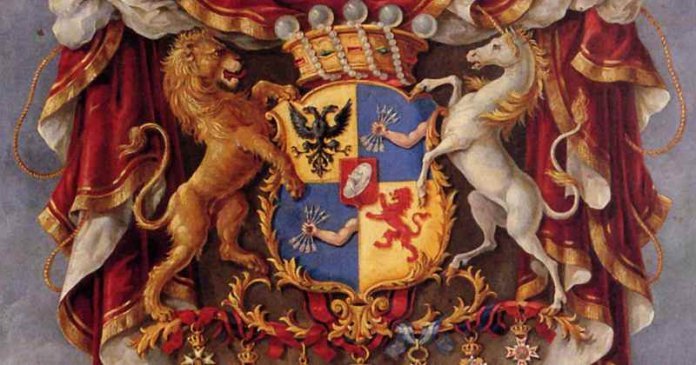
Irakli Nadaraia wanted to cure Lord Jacob Rothschild. They spoke of a secret society and initiation into it.
Irakli spoke of his walks in the woods, the properties of herbs and various plants, and his poetry and music.
Lord Jacob Rothschild wanted to meet in London, and they discussed how this would be arranged.
Irakli Nadaraia’s magical, esoteric poetry and his conversations about the mysteries of the universe delighted Lord Jacob Rothschild.
And when he passed away in February 2024, Irakli wrote on his Facebook page
,, Lord Jacob Rothschild suddenly appeared in my life. His kind words filled my heart with joy and feelings.
When he wrote to me: “Dear Irakli, now you will stay with us forever”, I wanted to record a video and send it to him. A video of me reading my poems and playing my music. They were bright, full of love words of my friend.
And so he left this world and went to the infinity of Light.
Dear friends
https://princessmichael.org.uk/
You and our other friends, brothers, sisters, fathers and children….. We pray and weep when people dear to our heart pass away. But the soul is immortal and we can sing, dance, recite poetry and play music ….. As a token of our love and respect.
Dear Lord Jacob Rothschild , the memories of you will remain in my heart. “
Archive Note
Memory record — international correspondence / London connection / final message (2024)
Letters from composers and musicians
Chronicle
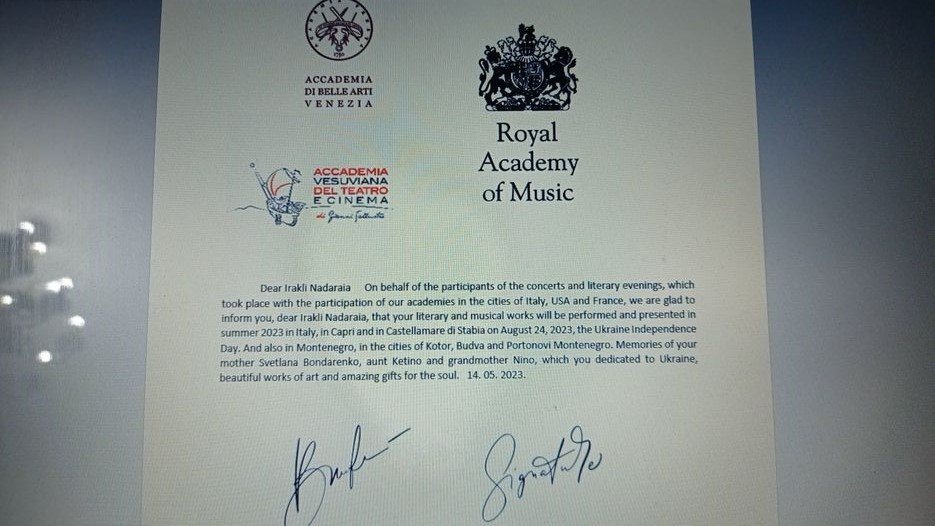
14 May 2023
Dear Irakli Nadaraia
On behalf of the participants in the concerts and literary evenings held with the involvement of our academies in cities across Italy, the USA and France, we are delighted to inform you that your literary and musical works will be performed and presented in the summer of 2023 in Italy, on Capri and in Castellammare di Stabia on 24 August 2023, on Ukraine’s Independence Day.
And also in Montenegro, in the cities of Kotor, Budva and Portonovo.
Your memories of your mother Svetlana Bondarenko, your aunt Ketino and your grandmother Nino, which you have dedicated to Ukraine, are wonderful works of art and marvellous gifts for the soul.
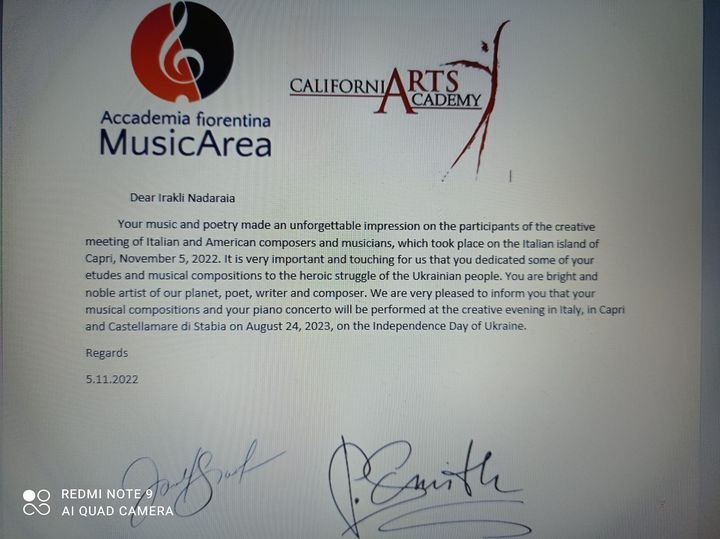
5 November 2022
Dear Irakli Nadaraia,
Your music and poetry made an unforgettable impression on the participants of the creative gathering of Italian and American composers and musicians, which took place on the Italian island of Capri on 5 November 2022.
It is very important and touching for us that you have dedicated some of your études and musical compositions to the heroic struggle of the Ukrainian people.
You are a brilliant and noble artist of our planet, a poet, writer and composer.
We are delighted to inform you that your musical works, including your concerto for piano and orchestra, will be performed at a creative evening to be held in Italy, on the island of Capri and in Castellammare di Stabia on 24 August 2023, Ukraine’s Independence Day.
Yours sincerely
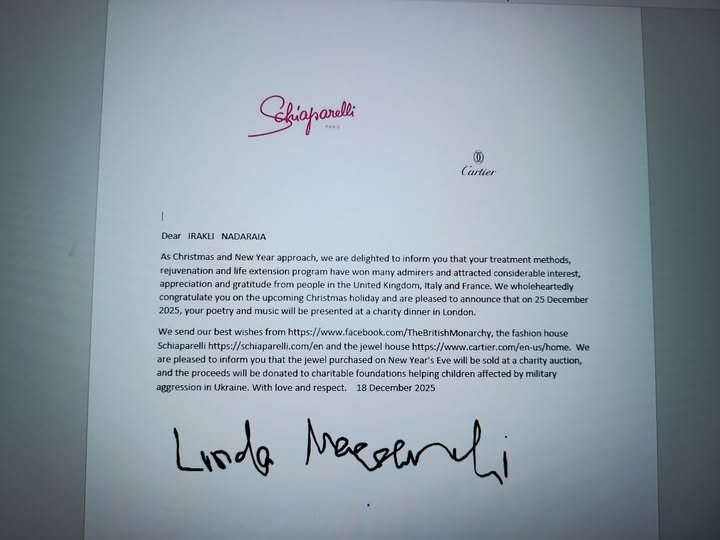
18 December 2025
Dear IRAKLI NADARAIA
As Christmas and New Year approach, we are delighted to inform you that your treatment methods, rejuvenation and life extension program have won many admirers and attracted considerable interest, appreciation and gratitude from people in the United Kingdom, Italy and France.
We wholeheartedly congratulate you on the upcoming Christmas holiday and are pleased to announce that on 25 December 2025, your poetry and music will be presented at a charity dinner in London.
We send our best wishes from https://www.facebook.com/TheBritishMonarchy
the fashion house Schiaparelli
and the jewel house
https://www.cartier.com/en-us/home
We are pleased to inform you that the jewel purchased on New Year’s Eve will be sold at a charity auction, and the proceeds will be donated to charitable foundations helping children affected by military aggression in Ukraine.
With love and respect
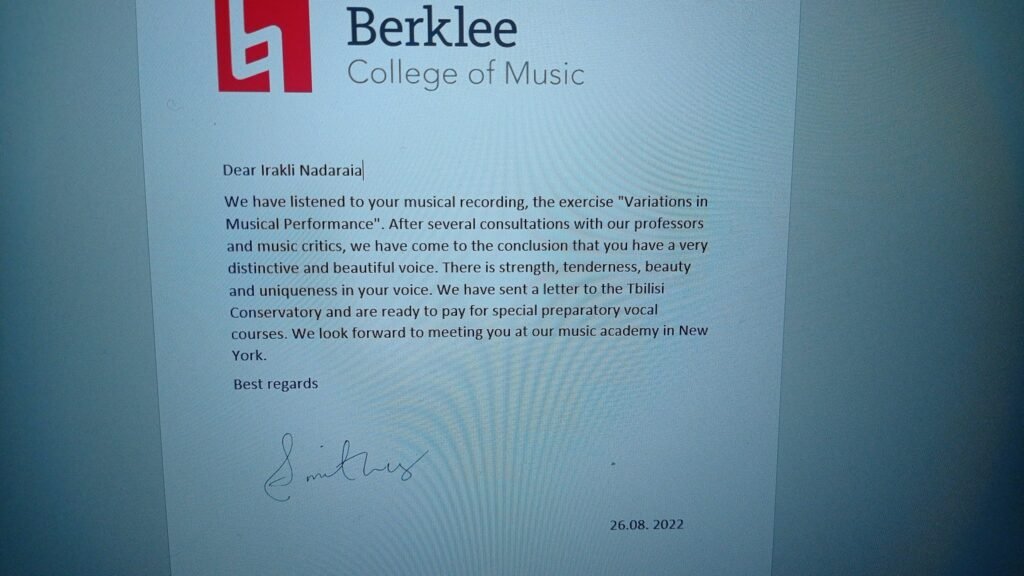
26 August 2022
Dear Irakli Nadaraia,
We have listened to your recording, ‘Exercise in Musical Variations’. Following several consultations with our professors and music critics, we have concluded that you have a very distinctive and beautiful voice.
Your voice possesses strength, tenderness, beauty and uniqueness.
We have sent a letter to the Tbilisi Conservatoire and are prepared to cover the costs of special preparatory vocal courses.
We look forward to meeting you at our music academy in New York.
With best regards
School Years in Sukhumi (Georgia)
The poet Irakli Nadaraia’s school years in Sukhumi. A prophecy about the outbreak of war

Chronicle
,, In Sukhumi, when he was in school.
When everyone left school after classes, he would be alone in a room of an empty school building. He would sit and listen to silence or sing strange songs.
When he skipped classes and walked alone to the ruins of Bagrat’s fortress, no one knew what this child was doing in such a remote and desolate place.
One day a teacher secretly followed him.
I followed Irakli and saw him talking to someone as he approached the ruins of the fortress. But no one was there.
The next day he asked Irakli who he was talking to in the ruins of the old castle.
“Kings and saints come and speak to me,” Irakli replied.
When Irakli was in school, he predicted the outbreak of war in Abkhazia. He went into the principal’s office and said that war was about to start.
The principal called me in and said: “This kid has gone crazy.” He asked me to call an ambulance because he wasn’t feeling well.
When the ambulance arrived, Irakli told them, “Pack your things and get out of town as soon as possible. The streets will be flooded with blood and tears. And all this will be gone forever.”
G. Kvaratskhelia
Archive Note
Memory record from Sukhumi school period.
Irakli Nadaraia. The Story of an Old Icon
Chronicle
,,Irakli often went to church in Sukhumi, to the White Cathedral.
He would sit for hours in the little room of the candle seller’s , inside the church, and talk to her.
One day the priest of that church came in this room and brought an icon wrapped in cloth: “Leave it here for me, and tomorrow I will take it away,” he said.
The woman put the icon on a shelf and offered Irakli some tea.
Suddenly Irakli got up, walked over to the icon, removed the wrapped cloth and said: “This icon is not going anywhere from this temple.”
The next morning he went to the temple again and waited for the priest.
“I will not give up the icon,” Irakli said and took it in his hands.
When the priest came to the temple, he became very angry.
“Who are you, what business is it of yours to interfere in our affairs,” he said to Irakli.
“Don’t sell that icon, don’t do it. Otherwise you will go blind.” said Irakli to him.
The priest took the icon from him and left the temple.
Climbing the stairs, he went to the residence, to his room.
On the stairs in the house he fell and went blind.
The candle seller and the people in the courtyard went up the stairs and helped him up.
“Where is this boy? I will not sell this icon,” the priest shouted.
When the icon was carried into the temple and placed on the altar, the priest felt his sight return to him.
He rejoiced and gave Irakli a large burgundy Bible. ”
A. Atmajeva-Panayotova
Archive Note
Religious memory episode from Sukhumi period.
The enemies will be punished
Chronicle
“During his university days he often walked alone in the city after lectures, and one day, when it was already dark, he went home on foot.
On his way home he was blocked by drunk and restless boys.
They were standing on the side of the road, arguing loudly.
One of them ran up and started insulting Irakli and swearing, he put his hand in Irakli’s long hair and yanked it as hard as he could.
Others ran up and started kicking and hitting Irakli.
A few days later we learned that one of them had been hit by a car and died.
Another had fallen from a tree in the village and was left disabled.
One was bitten by a snake and soon died of blood poisoning.
Two of them drowned in a river while resting in the mountains. ”
A. Gagloeva.
Archive Note
University period memory record.
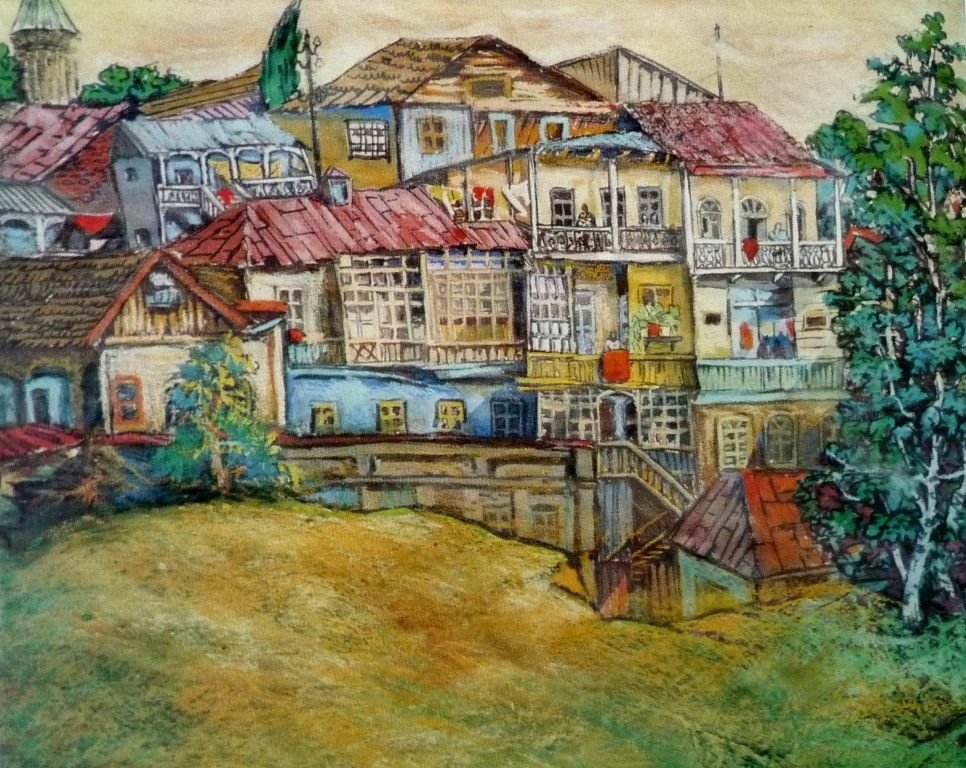
Saving the house-museum of the artist Elene Akhvlediani from looters
Chronicle
“At that time Irakli often visited his new friend at her house on Akhvlediani Street, in the old district of Tbilisi.
In this house, on the top floor, lived the Djikia sisters.
There was a green room in the big old apartment where Audrey lived.
Marina was always happy to have visitors ; she was happy when this handsome young man, a poet, came in, read poetry and told of a thousand wonders.
He was treated to dinner and sweets.
Then they drank tea and wine.
They agreed that on the birthday of the poet Titian Tabidze, Irakli would bring apple blossom branches to his monument by the Anchischati church.
One day, as Irakli was descending the darkened staircase of the entrance, he heard a woman’s voice at the door of the museum of the artist Elene Akhvlediani.
It was late evening, no one was in the museum at the time.
Irakli went outside and across the street, in a small garden, he saw several men looking at the building and windows.
He approached them and said: “You want to rob Helena’s house. Steal paintings and things . Go home, or you will die.”
The men got scared and ran away.
And then it turned out that they were preparing to rob a museum that night.”
T. Kopaliani.
Archive Note
Tbilisi period memory — Elene Akhvlediani house-museum episode.
Charles Aznavour’s concert in Georgia. A conversation with the poet and a longing to see his deceased parents.

Chronicle
” Before the singer Charles Aznavour arrived in Georgia, where he was having a concert, Irakli received a phone call from France and arranged to have a telephone conversation with the singer.
“He wants to talk about his father,” Irakli said.
“When you sing, you will see your father. And you will be able to sing for him. You will see your father and your mother,” Irakli told him.
Those who were at this concert noticed Charles Aznavour singing one of his songs.
He was stubbornly looking in one direction and crying.
When the singer returned home, he called Irakli himself and said:
“My father was wearing a white shirt. He looked at me and showed me his house and yard. And my mother stood by the tree and listened to me.”
G. Daraselia
Archive Note
Cultural memory episode — Charles Aznavour concert in Georgia.
Conversations about her son and her desire to bring him back to life
A memory of the healer Juna
Chronicle
,, Juna Davitashvili called him, told him about her son and cried.
She asked Irakli several times, “Can I bring Vakho back to life?
Irakli was on the phone with her, and as they were saying goodbye, Juna told him, “Please don’t tell me about the future. I don’t want to know what will happen. Help me bring my son back to life.”
Irakli loved Juna, considered her a friend and called her a soul.
One day Irakli told me, “Juna will fall ill and soon leave this world. She is tired of waiting for miracles. Many people offend her, call her a fraud, ungrateful and evil, stupid people…”.
On June 5, 2015, he closed the windows in the house, lit candles.
And said: “She’s leaving. Bring me nuts, lots of nuts, and scatter them around the rooms.”
On June 7, at night, he sat in the yard and cried:
“Soon Juna will be gone, and then my Aunt Ketino will be gone too,” said Irakli.
E. Giorgobiani
Archive Note
Memory record — Juna Davitashvili conversation episode
Gold and diamonds in an old cemetery in Lviv
Chronicle
“A woman from Ukraine came to see him.
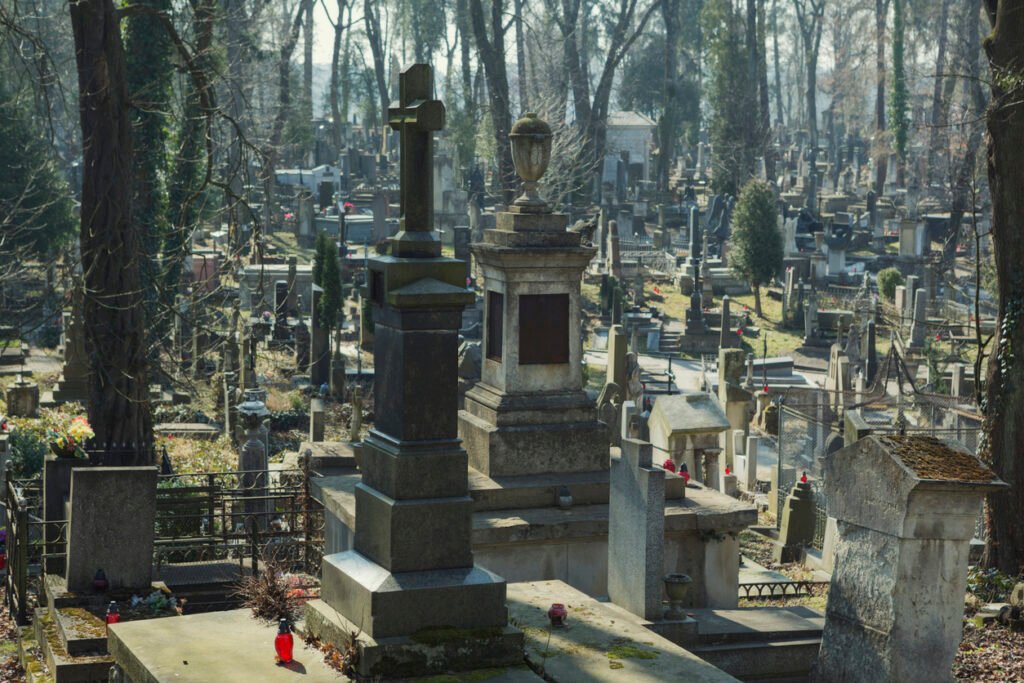
She brought valuable gifts and asked to find her grandmother’s mother’s grave in the old cemetery in Lviv.
“You are not looking for your grandmother’s mother, you are looking for gold and diamonds. If you do as I say, I will help you. If not, take your gifts and go,” Irakli told her.
“I will do anything you say,” the woman swore.
You will not keep your word, you will lie.
But I know that you have long dreamed, and that gold is calling to you.
Take it from there and divide it equally, give your sisters and your brother their share.
And if you do not do as I say, you will soon die.”
He drew the exact location of the tombstone and the empty grave below them with an inscription.
There was a grave with gold and diamond jewelry, which after the 1917 revolution rich Jews hid under the tombstone.
They were shot and took the secret with them.
And this woman was their descendant, and she had a dream that in the cemetery in Lvov there is the grave of her grandmother’s mother, where this treasure is located.
This woman went to Lvov, found the grave, found the gold and diamonds, sold them, and, being afraid of Irakli ‘ advice, divided the money equally among her three sisters and her sick brother.
She put the money into various accounts, but soon changed her mind and left for America, taking the money with her.
There she bought a large apartment in downtown New York City.
She met a young actor and decided to get married.
On her wedding day, this guy robbed her, stealing all the money she kept in the apartment.
The woman was sick and didn’t have long to live.
She sold the apartment and spent the money on expensive medical treatment.
But she soon died alone. “
N. Savchenko.
Archive Note
Memory record — Lviv cemetery episode.
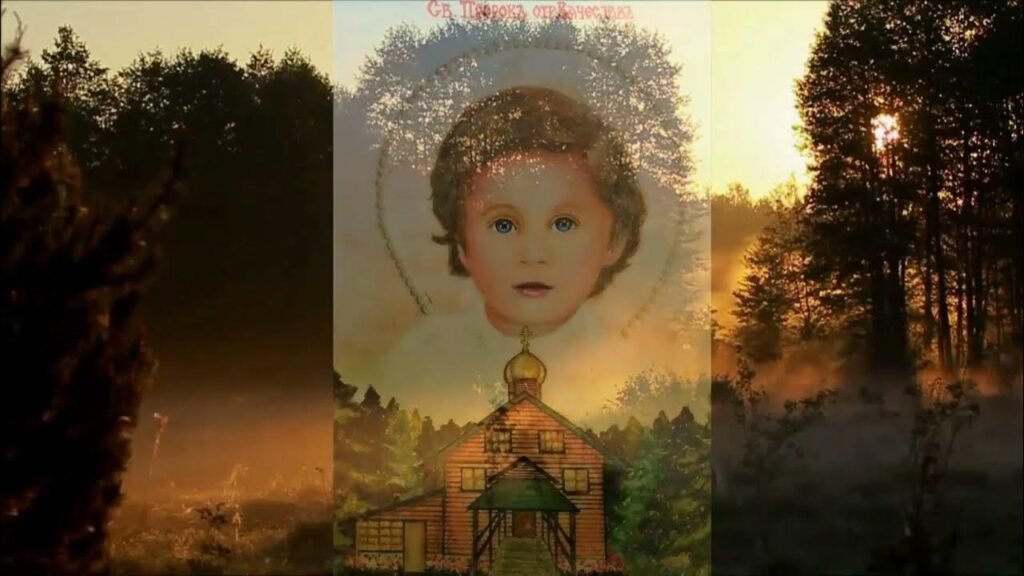
Saint Basil the Prophet ( Отрок Вячеслав ) and the poet Irakli Nadaraia
Chronicle
” In the summer I was vacationing with friends in Batumi.
When we decided to go to the botanical garden, we invited Irakli with us.
He was thoughtful, handsome, and attracted the attention of passersby.
When we got up there, where we could see the sea, Irakli said:
“I’m going to bed now. Otrok Vyacheslav will come and we will go to the sea. Don’t wake me. I’ll tell you about it when I come back.”
He slept for half an hour, and when he woke up he was as beautiful as ever.
He told us about Otrok Vyacheslav the boy.
About their conversation.
And about where they had gone and what they had seen.
On the way home, Irakli told us about the plants that were around.
About what they could heal, what they were, where they came from, and what they wanted.
He spoke in a language we didn’t know and touched trees and grass.”
О. Romanova
Archive Note
Batumi period memory — botanical garden episode.
In the mortuary of the Tbilisi Republican Hospital
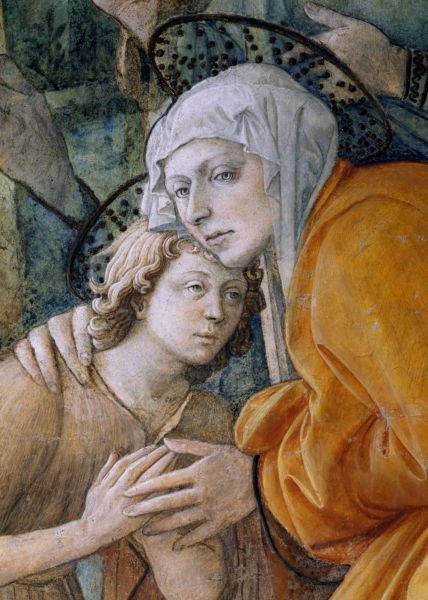
Chronicle
,, Irakli was sitting in the courtyard of the Tbilisi Republican Hospital, looking at the trees.
A crying boy came up to him and sat beside him.
His grandmother had died, and an hour earlier her body had been taken to the morgue building, which stood alone in the hospital yard.
“I didn’t get to say goodbye to her and I want to see her one last time,” the boy said and hugged Irakly.
Let’s go. You can see your grandmother and talk to her,” Irakli told him.
When they came to the door of the guard, Irakli told them, “Be still and
sleep.”
And the guards fell asleep.
Irakli and the boy entered the building and went into the hall where the dead woman’s body lay.
Suddenly an elderly woman in a white robe approached them.
Academician, Dr. Tamar Dekanosidze, pathologist.
She wanted to call the guards, but Irakli stopped her and said:
“The woman you prepared doesn’t want you to touch her body and wants to be buried this way, untouched.
“But we can’t do that,” Tamar Dekanosidze said.
“Ask her,” said Irakli, and everyone turned toward the deceased.
Suddenly there was a light in the room from a distant window, and the room was filled with the scent of roses.
The light illuminated the deceased’s face, which had a smile on it.
Tamar and Irakli left their grandson and grandmother alone.
And an hour later, by order of the academic, the body of the deceased was taken to her home, never to be touched. “
С. Shervashidze
Archive Note
Tbilisi period memory — hospital mortuary episode.
The prophecy concerning the murder of Dzhokhar Dudaev
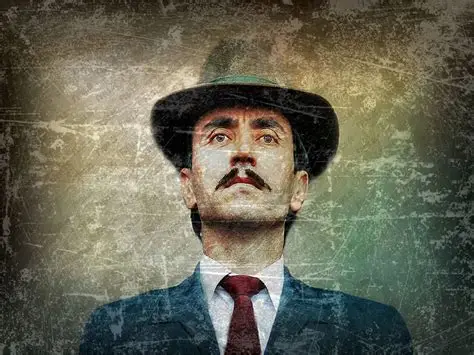
Chronicle
“In the Tbilisi Republican Hospital.
There were wounded Chechens in our ward, who were secretly taken to Tbilisi and treated.
Irakli used to come to their room.
He brought them fruit.
He would sit and talk to them.
He comforted their relatives.
He helped them with words and treated them with his hands.
One wounded warrior’s grandmother, a Russian grandmother, was sitting in the corner of the room crying.
Irakli read poetry to her, and she fell asleep.
One April afternoon Iraklii came in agitated and wanted to enter the room, but the doctor forbade him to come and would not let him into the room with the wounded.
But Irakli burst into the room screaming.
He went up to each of the wounded and said something to them in a low voice.
When Irakli left, one of the soldiers said to me, “He’s a beautiful boy. A poet and a dreamer, like Baron Munchausen.”
Later we learned that Irakli wanted to warn General Dzhokhar Dudayev, president of Chechnya, of an imminent attack and explosion.
He wanted to save his life.
He also wanted to talk to his wife, the artist Alla Dudayeva, on the phone, but no one believed his words.
That was April 19, 1996.
And Irakli never visited the wounded again.”
M. Sturua
Archive Note
Tbilisi period memory — hospital episode related to April 19, 1996.
Saving the theatre The Royal District Theater from a fire
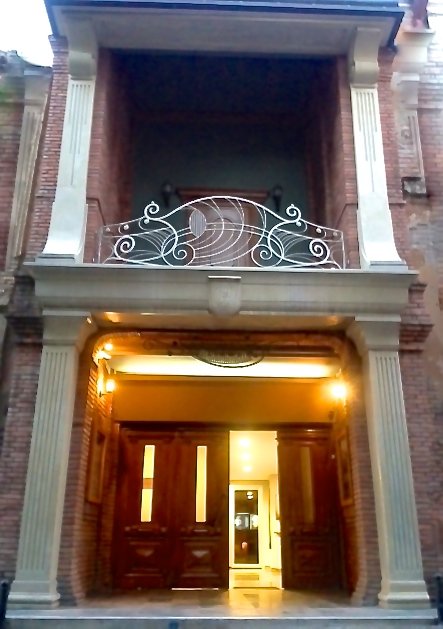
Chronicle
,, The city of Tbilisi.
The Royal District Theater on Abesadze Street, in the old part of the city.
There used to be a big junkyard here. piled with rocks, planks, earth and thousands of different junk.
Actress Iza Gigoshvili was sitting in the foyer of the theater.
The work was going slowly.
The trash was being removed, and the theater had been under construction since the beginning.
In the evenings she waited for a mysterious guest, a poet, to whom she told about her dreams and asked for advice.
One evening she felt very sad.
It was raining outside, and there was no one in the theater building.
She sat looking at old posters and photographs.
Suddenly a sense of dread overwhelmed her and she saw the ghost of an old woman in the corner of the theater.
When Irakli entered, he said:
“Iza, this woman used to live here. With a cat. Her soul is in turmoil and cannot find peace. She may burn this building down. Give me a candle and a piece of bread.”
He then went to the back of the hall and, when he returned, warned Iza Gigoshvili to pay attention to the matches.
The next day one of the theater guests was smoking a cigarette and threw a lighted match toward the wooden boards.
He threw it and forgot.
And Isa at the time was on the other side of the building and saw nothing.
But suddenly for a moment she remembered Irakli’s words and at that very instant she ran to the side where the board was burning and immediately put out the fire. “
And so the theater was saved from the fire.
V. Krylova
Archive Note
Tbilisi period memory — Royal District Theater episode
Dmitri Hvorostovsky and the poet Irakli Nadaraia
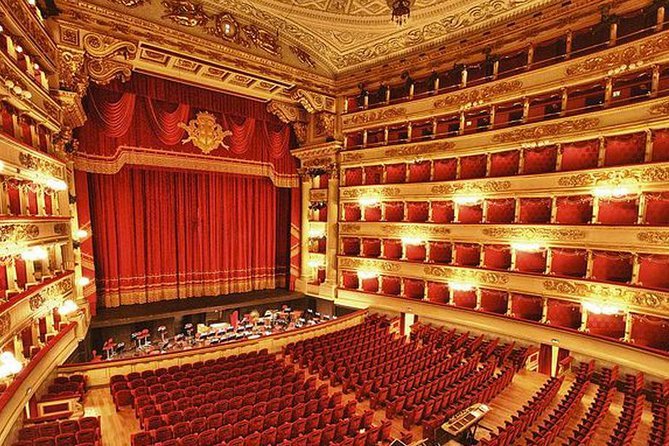
Chronicle
“While the opera singer Dmitri Hvorostovsky was in Tbilisi, he expressed a desire to meet with Irakli.
Irakli was called and asked to receive Dmitri and talk to him.
But the meeting did not take place, as Hvorostovsky left Tbilisi the next day.
And that day Irakli treated with his own hands the daughter of a garbage man, whom he did not refuse treatment.
In the evening he wrote a letter to Dmitri.
In the envelope he put seven beans.
“Dear Dmitri,” the letter said, “you will live seven more years in this sad and beautiful country.
Every New Year take this bean.
Go to the window and throw it into the street.
Death will take it and go away.
But don’t tell anyone about it.”
Seven years would pass, and Dmitri Hvorostovsky would recall this story with tears in his eyes shortly before his death. ”
G. Lapteva
Archive Note
Tbilisi period memory — Dmitri Hvorostovsky episode.
What Irakli Nadaraia said to Valeria Novodvorskaya
Chronicle
,, In Sukhumi, in the building of the Council of Ministers, a conversation on the phone between Irakli and Valeria Novodvorskaya.
During the war in Abkhazia.
Irakli warned Novodvorskaya and told her:
“In Tbilisi you will be beaten, insulted and imprisoned.
And they will break your heart like no other in your life.
Then years will pass, you will come another time, and the Georgians in Tbilisi will give you a reward.”
“Will they kill me?” – She asked Irakli.
“Your body, like magic snowflakes, will return to the people from the fiery furnace.
Your friends will cry.
They will say goodbye to you with sorrow.
And then they will give your body to the fiery furnace,” Irakli told her. “
G. Tsuleiskiri
Archive Note
Sukhumi period memory — conversation during the Abkhazia war.
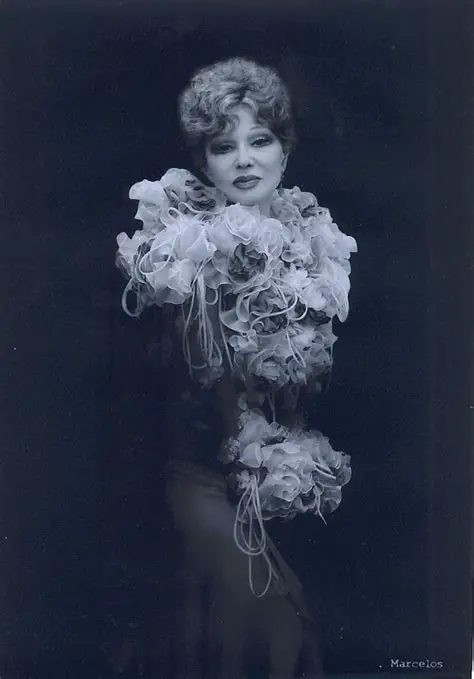
The death of Lyudmila Gurchenko
Chronicle
“The day before actress Ludmila Gurchenko died, Irakli told us he was expecting a guest and asked us to bring everything he listed to the table.
In the evening he locked the doors of the house and set the table.
And there were two chairs by the table, for himself and the guest.
He told us that he was waiting for Lyudmila Gurchenko.
The next day we learned of the actress’ death on television.
“She came and we talked about everything,” Irakli told us. ”
D. Nebieridze
Archive Note
Memory record — Lyudmila Gurchenko episode.
Flowers for Mother Teresa
Chronicle
“A few days after the tragedy on April 9, Irakli made an album with pictures of the dead, poems and articles from newspapers, and pictures from magazines.
He made a small memorial at the wall of the White Church in Sukhum.
Where people brought flowers and lit candles.
He made a small memorial in the foyer of the Children’s Railway Sanatorium, where he placed flowers and lit candles.
This angered the opponents of Georgia’s freedom and independence.
They scolded Irakli and warned that he would be punished for it .
But no matter how many times they took down the pictures of the dead, or threw away the flowers and candles, Irakli did it again and again.
At home, he would sit by the window and play the piano and sing with tears in his eyes.
In those days I saw Irakli on the seashore, he was sitting and crying.
He was singing a strange song and looking at the sea.
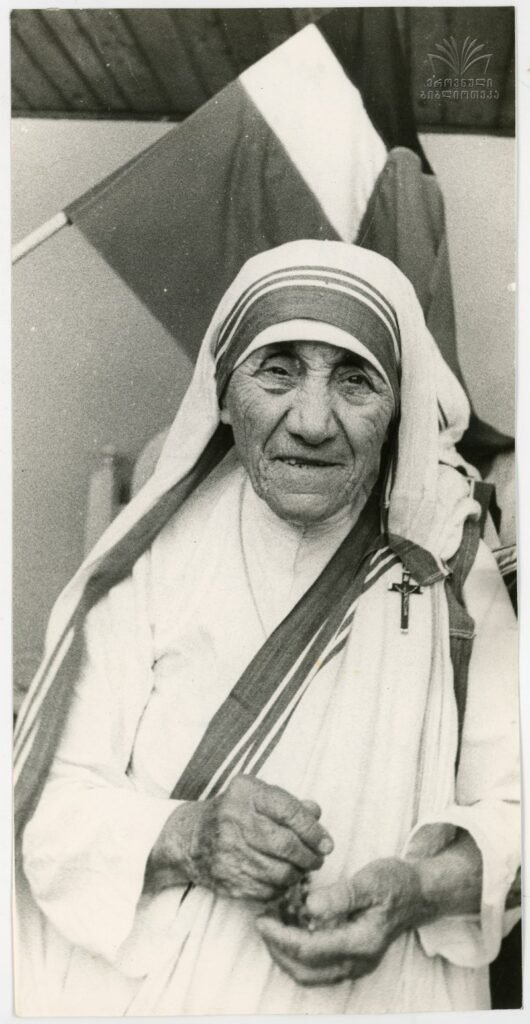
“Soon Mother Teresa will come and take my flowers with her,” Irakli told me.
Then I was told that when Mother Teresa was feeling ill from sickness and weakness, she touched gently the flowers Irakli had sent her and sang in a quiet voice to herself.
Time passed, and she kept these flowers in a notebook in which she wrote letters to God.
Shortly before she died, she said to a nun:
“I will take these flowers with me.
They will light my way in the night as I seek the way to the Lord. “
T. Chkvimiani
Archive Note
Sukhumi period memory — April 9 tragedy and Mother Teresa episode.
The Spirit of Michael Jackson in Tbilisi

Chronicle
“In those days the news of Michael Jackson’s death spread.
We called Irakli.
We wanted to visit him, but he wouldn’t pick up the phone and wouldn’t open the door for anyone.
Two days later we came again and kept calling until he opened the door.
Irakli looked strange.
As if he had come back from the other world, from another world .
Pale and sad.
Irakli told us that Michael had been coming to him and talking to him for two days now.
They listen to songs together and Michael tells him secrets.
We were surprised, because Irakli was never a Jackson fan or a follower of his works.
A few days later he invited us over to his place and said.
“Tonight I’m going to set the table and cook the food he loved.
Michael will come and sit with us at this table.”
We arrived at the appointed time.
There was a large black umbrella hanging from the chandelier in the living room.
Downstairs, in the dining room, the table was set.
As we sat down at the table, Irakli said:
“Michael , I know you’re here.
Give us a sign that you are here.”
Suddenly, glasses and plates clinked and dishes rustled on the side where the chair for Michael was at the table.
The frightened guests ran out of the dining room and upstairs.
But there they saw such a picture.
In the empty room, where there was no one, a black umbrella was hanging from the chandelier, swaying in different directions. “
L. Kvashilava
Archive Note
Tbilisi period memory — Michael Jackson episode.
A flock of birds flew to his house
Chronicle
,,When the singer Temur Tsiklauri died, Irakli told me:
“Come with me. We need to visit the child.”
“He told me that he saw in a dream Temur Tsiklauri, who asked him, ‘Come to this child, put your hands on his head, heal him.
And when he grows up, I will give him a sonorous voice and he will sing.
But until then, don’t tell anyone where this child lives or who he is.”
We arrived at an old wooden house on the outskirts of Tbilisi.
The child’s surprised mother brought us home.
The child was sad and crying quietly.
Irakli approached him, put his arm around his head and said:
“Temur will be with you all your life.
You will sing, and now the disease will be gone from you.”
The next day the child’s mother called.
She cried and said that the severe headaches were gone and the child was back on his feet.
On the day of Temur Tsiklauri’s funeral, as his body was being carried out of the Blue Monastery, Irakli stood at the window of his house, from which the Blue Monastery was visible as in the palm of his hand, and said:
“Now you will see Temur.
He is saying goodbye to me.”
Suddenly a large flock of birds flew out of the Blue Cloister and headed for the windows of Her’ Irakli’s house.
A flock of birds flew up to Irakli’s windows several times.
We heard the birds singing, their voices, and then they flew towards the mountains.”
G. Bendeliani
Archive Note
Tbilisi period memory — Temur Tsiklauri episode.
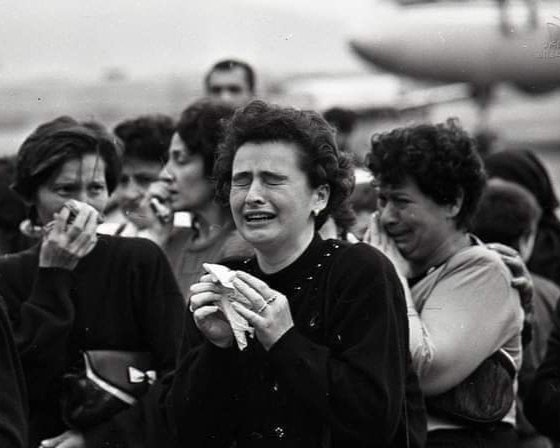
The mothers of those who had been killed turned to him for help and advice
Chronicle
“It was a cool fall evening.
Guests were drinking coffee on the veranda when the doorbell rang.
I opened the door and was frightened.
There were five women in black standing on the doorstep, some of them crying.
They wanted to see Irakli.
I told them Irakli was busy, he had guests, and suggested they come back in a week.
The women went to the stairs, and I closed the door.
Suddenly Irakli shouted from the back of the apartment:
“Why didn’t you let them in? I was waiting for them to come. Go quickly and call them.”
I ran outside.
I caught up with the women.
Irakli talked to them, and then they left.
They left pictures of their dead children.
Their homes in Sukhumi were taken from them and burned.
Their children were tortured to death, including a three-year-old Georgian boy who had his nose cut off and his eyes gouged out.
The women searched for their bodies, and Irakli told them where their graves were.
“Those who stole your homes and killed your children will soon die one by one, and their kind will be destroyed.” – Irakli told the women.
They found the graves of their loved ones and called out.
“You know,” said one of them, “those who killed our children are destroyed.
One died of a serious illness.
Another hanged himself.
The other two killed each other, they could not divide the loot.”
M. Yezuhbaia
Archive Note
Sukhumi period memory — post-conflict testimony episode.
The queen of an African country is asking for help
Chronicle
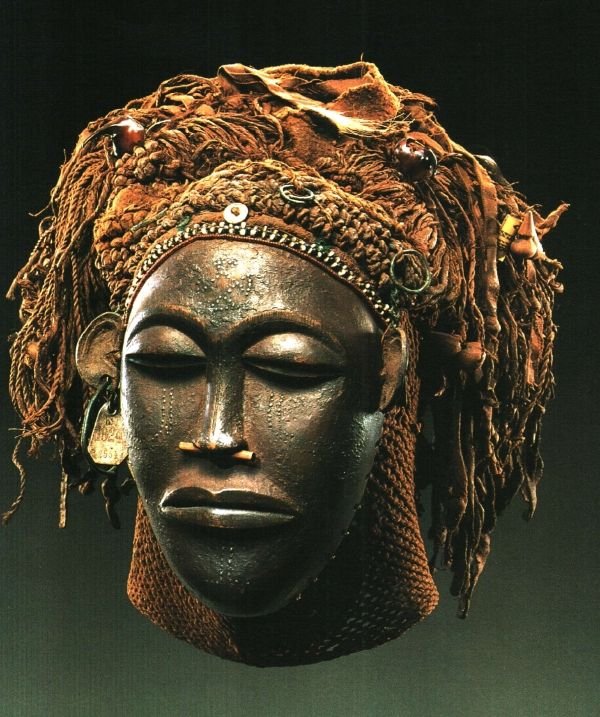
,, It is often visited by influential, famous people.
So he was visited by the queen of an African country whose husband was the most powerful voodoo sorcerer in his country.
They got married.
At first all was well, but gossipers and evil people quarreled with each other.
The queen asked Irakli to help her.
And Irakli said:
“Bring me an old doll from the store and quince tree leaves.”
And soon they were reconciled.
The king refused to conjure.
He said that the dolls told him,
“Far from you there is one who has a doll that cries and forbids you to conjure. “.
M .Dositey
Archive Note
International memory episode — African royal court account.
Does God really exist?
Chronicle
“A woman, a former director of a large factory, came to his poetry evening.
The evening took place in Tbilisi, at the theater on Rustaveli Avenue.
This woman stood in tears at the entrance and was in no hurry to enter the theater.
She had lost her home in Tbilisi and then her apartment.
Her son had cheated his mother and left her homeless on the street.
Now this woman was living in a small rented apartment and wanted to commit suicide.
After the evening we went up to Irakli and she told him:
“There is no God in this world. It’s all lies and deceit. There is so much injustice around. Good people are suffering. Let God prove to me that he exists, or I will kill myself tonight.”
Irakli sat her down in a chair.
Brought a piece of paper and a pencil.
“Write the words and go away,” he told her.
The woman, panting, wrote:
“Pigeon. Bread. Rose. Water.”
She got up and left.
A few days later I saw this woman in the street.
She was feeding pigeons with a bun.
She ran up to me, hugged me, and said:
“That day, after the poetry night, when we were talking with Irakli and I was writing words…
I went home to kill myself.
I wanted to go to the bathroom and slit my wrists.
A pigeon followed me all the way home and accompanied me until I reached home.
Then this pigeon started eating a small piece of bread lying on the ground.
From the neighbor’s yard, a girl ran up to me and unexpectedly gave me a rose.
Then it started to rain.
When I reached my apartment, I started jumping for joy and excitement.
A moment later, a floorboard suddenly cracked and broke.
My foot fell through the floor.
I groped with my hands and found a cloth bag with gold in it.”
V. Timchenko
Archive Note
Tbilisi period memory — poetry evening episode.
His enemies will always be punished
Chronicle
“When the website www.iraklinadaraia.com was created (2010), it featured articles, interviews, and various materials about Irakli Nadaraia in Georgian, English, Russian, and Italian.
People called us and congratulated us on the appearance of this website in Georgia.
After all, one could go to the site and ask Irakli questions.
But not everyone was happy about the news.
A few months later, the site was hacked and all the materials on it were destroyed.
They hated Irakli because he didn’t want to communicate with them and participate in the killing of animals.
Only three months would pass and everyone involved would die in a massive fire. “
M. Mukhigulashvili
“Young women went to Irakli to learn Italian.
The head of the election headquarters of one of Georgia’s well-known presidential candidates and her friends.
They were learning Italian because they were going to go to Italy.
At the time, Irakli said his mother was Italian from Venice.
He talked about it at his poetry evenings and to journalists who wrote articles about him.
“I see her. She comes to me from the riverbank.
Sometimes we meet by the sea, sometimes in the streets of Venice,” Irakli once told me.
When these women found out about it, they got angry and decided to intimidate him.
They threatened police and reprisals, persecution and destruction.
Articles written about him were read with mockery and laughed out loud.
The money paid for Italian lessons was taken back, much to Irakli’s resentment.
“They will be like wildflowers rotting in the swamp.
They will disappear like women, and all doors will be closed to them. ” said Irakli.
Years would pass and this presidential candidate would die of a serious illness, after a long illness and suffering. “
M. Danelia
” When Irakli was living on Zandukeli Street in Tbilisi, a young man got to know him and often visited him.
He then moved into his house.
He slept at Irakli’s house, ate there and swore his friendship to him.
And then he slandered him, a security service agent and a minister of the Georgian Orthodox Church.
He reported him to the security service.
Irakli was arrested on false charges.
He was detained for 24 hours.
He was insulted, sworn at and threatened.
They took him to the office of a high-ranking security service official and threatened to torture and kill him.
He was then released and escorted out of the building.
“This man will die of a serious illness. He will lose his face, his mind and his soul,” said Irakli of this high-ranking official, as he left the Ministry of Security building.
He saw the informer enter the building.
He looked at Irakli in surprise and wondered how he had escaped prison or death.
Later, Irakli told me: “He’ll just keep on going like that.
He’ll make a bit of money off other people’s misfortune and by informing on them.
And then he’ll wander the streets like a homeless person.
And he’ll wander like that for the rest of his life.
He’ll never have a home, he’ll never have any real friends”
L. Narimanidze.
“There is a wicked woman, ugly in spirit, who publishes books under a pseudonym and walks the earth, full of malice and envy.
She has written a “book” in which she has included biographical excerpts from the life of Irakli Nadaraya.
She stole these biographical excerpts.
She smeared them with filth and published them.
In it, she calls Irakli a swindler, a thief and a pimp.
She has included thousands of obscenities in this ‘book’ and published it.
The book’s editor is a playwright who participated in the creation and publication of this abomination.
These repulsive texts were published by a Tbilisi-based publishing house.
“When I went to Irakli in a rage and advised him to take these scoundrels to court, he said to me:
‘Time will pass and they will realise the evil they have done.
They will regret it, but they will not be able to turn back time’
K. Paliashvili
Archive Note
Chronicle compilation — digital, political, and social episodes (2010–later period).
An evening in memory of the actress Lia Eliava
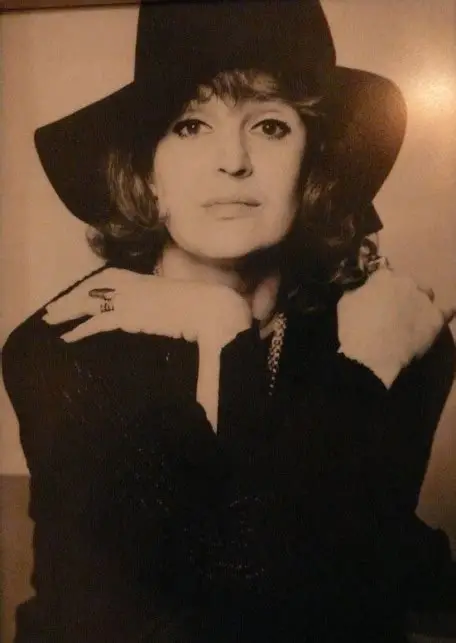
Chronicle
,, Those who were at the evening in memory of the actress Lia Eliava organized by Irakli recalls:
“Irakli decided to organize an evening in memory of Lia Eliava at the university and went to the rector, with whom he was not allowed to meet.
And then they banned the organization of the evening.
He was not given a stage and was told, ‘How can you hold such an evening.
The actor’s family didn’t believe they were dealing with anything of value either.
And Irakli said Leah told him she wanted to have this evening to say goodbye to everyone.
And no one did anything for the evening.
You see, nobody helps you. No one believes this evening will happen,” I said to Irakli.
And he said, “Leah wants this evening.”
And a miracle happened.
We were provided with a hall and a free bouquet of expensive flowers.
A portrait of the actress was brought from home.
Her family and many friends and acquaintances came.
Actors, journalists, television and the press.
The rector of the university was surprised and scolded everyone:
“If such a big evening was planned, why didn’t anyone warn”.
When Irakli came on stage, he said that Leah was about to enter the hall, she was here and wanted to say goodbye to everyone.
People cried and said they could feel Leah’s presence in the audience.
At the end of the evening, Irakli read the poem “Rain” and told the audience:
“When this evening is over, Leah will come to you in the form of rain and caress you.
This will be her farewell to you.”
When the evening was over and people went outside, it rained for several minutes, though there was not a cloud in the sky. ”
M. Nemsitsveridze.
Archive Note
Memorial performance — Lia Eliava tribute evening.
The healing of the cemetery cleaner
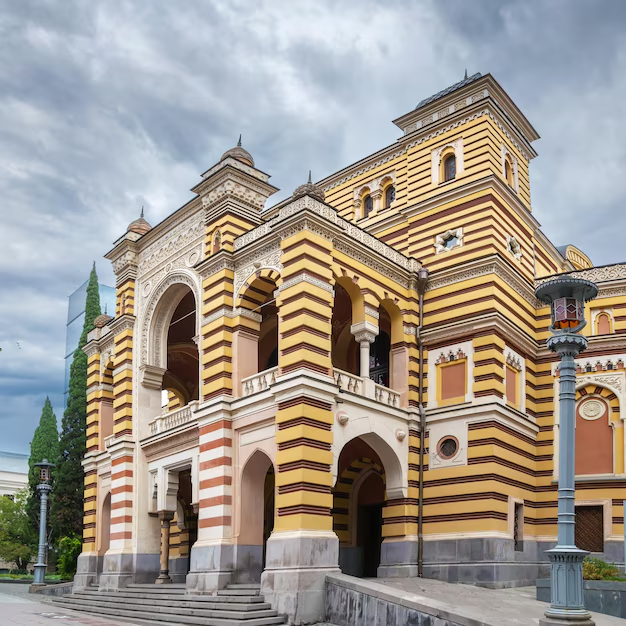
Chronicle
“Irakli often went to the grave of the deceased opera singer Maia Tomadze and read poetry to her.
One autumn evening, on his way back from the cemetery, he met on the road an old woman, hunched over at the waist and sickly, the cemetery cleaner.
“Take some stones from Maya’s grave.
Take them home and put them next to your bed when you go to bed.” – Irakli told her.
She believed him, and after a few days she straightened up and recovered.
And then the woman had a dream in which Maya Tomadze told her:
“I love it when Irakli reads poetry to me”
Z. Kereselidze
Archive Note
Cemetery episode — healing narrative linked to Maia Tomadze’s grave.
A meeting at the racecourse in Tbilisi
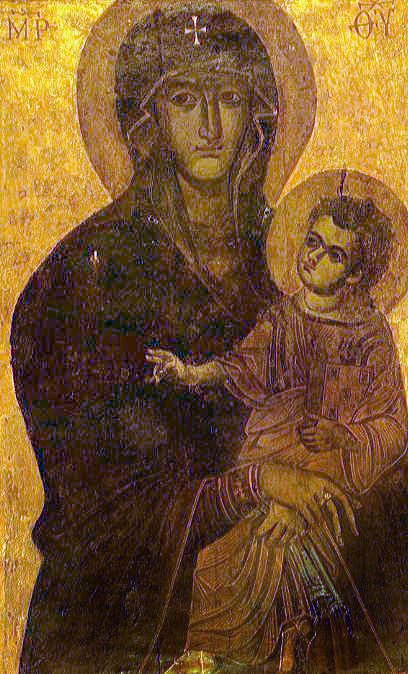
Chronicle
,,When Irakli lived on Saburtalo in Tbilisi, he often took walks at the hippodrome.
One evening some boys came up to him and said:
“We often see you here alone. You keep walking and walking alone.
Come with us.
We want you to be our priest. “
Irakli followed the young men deep into the forest.
Among the dark trees he saw a dozen young girls and boys.
They approached him one by one.
They said they loved him and asked him to touch their hair.
Then they asked Irakli to be present at the ceremony.
And Irakli said to them:
“You will not gather here again.
And this place will be destroyed.
Do not burn the icons of the Mother of God and Jesus.
I will take these icons away ”.
The young men became angry and began cursing him with foul language.
Then they started tearing his clothes off him.
,,Stop it, or you will go blind,” Irakli told them.
Suddenly the night sky darkened even more, and the forest was filled with their cries:
“I can’t see anything, I’m blind,” they shouted.
Irakli took the icons and returned home.
When their sight was restored, the followers of Satan’s cult left the racetrack and were never seen again.
The next day bulldozers and construction machinery came to the racetrack and it ceased to exist.”
G. Kasanidi
Archive Note
Tbilisi hippodrome episode — Saburtalo memory narrative.
The singer Eter Kakulia and apples

“During singer Eter Kakulia’s illness, Irakli often said to us:
,,Go get apples.
Buy them from the old ladies and bring them to me. “
We would bring them and leave them on the table.
Irakli would put those apples on a white plate and sing.
He would lock the doors of the house, and we could hear him singing outside.
On days like that, Eteri’s pains subsided and she felt better.
When she died, Irakli called the children who were playing in the yard.
He handed them apples and said:
“Remember Eteri, children.
Take these apples and eat them.
And give three apples to the old people.”
F. Gersamia
Archive Note
Tbilisi memory episode — singer Eter Kakulia case.
Seven butterflies in the room
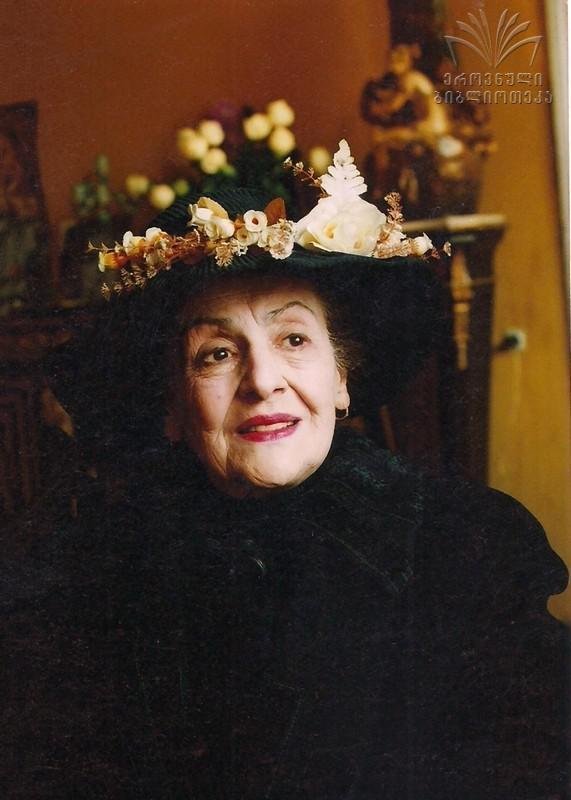
Chronicle
“One hot summer evening Irakli was walking along the road to the Mtatsminda Pantheon.
He stopped on Chitadze Street and stopped by the actress Dodo Chichinadze, who lived nearby.
Dodo was cooking dinner in the kitchen.
She was very happy to see Irakli.
She hugged him and cried.
“I am about to die and leave this world,” she said to Irakli.
And he answered:
“Dodo, the butterflies are coming and will tell you everything.”
Suddenly seven butterflies of different colors flew into the room and touched the walls with their wings.
And Dodo and Irakli stared at them in silence. “
L. Bregvadze
Archive Note
Tbilisi memory episode — Dodo Chichinadze encounter.
Rudolf Nureyev in the poet’s life
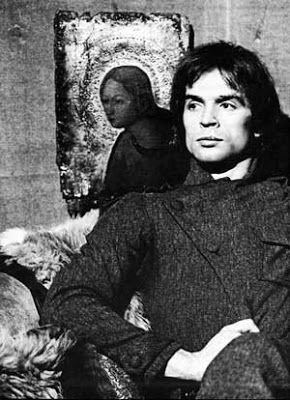
Chronicle
“When they were flying from Sukhumi to Tbilisi on the plane with the wounded, several planes were hit by missiles and blown up.
When they landed safely on the ground, Irakli told me :
He whispered in my ear:
“Don’t be afraid, my beautiful boy.
I am with you, and nothing will happen.”
“Who whispered to you?” I asked Irakli.
“Rudolf Nureyev,” he answered me.
He had seen his ghost before.
Once in Sukhumi, during the bombing of the city, he went to pray in a darkened room where an old icon rested, and saw his ghost in the corner of the room. ”
G. Baratashvili
Archive Note
War-time memory episode — Sukhumi evacuation context.
In the summer of 2024

Chronicle
,,When the transgender woman Kesaria Abramidze was murdered in Tbilisi, I phoned Irakli straight away.
He is in Montenegro, in the town of Budva.
A few days before the murder, Irakli told me that a woman would be killed in Tbilisi.
“I know who it is. It’s Kesaria Abramidze.”
How many times have I warned her? How many times have I told her that death would be near this summer?” I said we needed to warn her urgently.
And Irakli replied:
“She knows, but she thinks it’s just words and nothing will happen.”
His voice was sad.
“It hurts me so much when people I know pass away.
I will always be young and watch as others leave and grow old.
But I will help people find rejuvenation and prolong their lives.”
Kesaria Abramidze loved and respected Irakli very much.
Whenever she saw Irakli, she would run up to him and greet him very loudly, so that the whole street could hear.
On the evening of Kesaria Abramidze’s death, Irakli was sitting by the sea in Montenegro, near the old town of Sveti Stefan.
He lit a candle by the sea.
When I phoned him, he was crying and said that Father Gabriel had come.
And Irakli asked him to help Kesaria’s soul find peace and light.”
V. Ginzburg
Archive Note
2024 memory episode — Montenegro .
At the home of the poet Titsian Tabidze
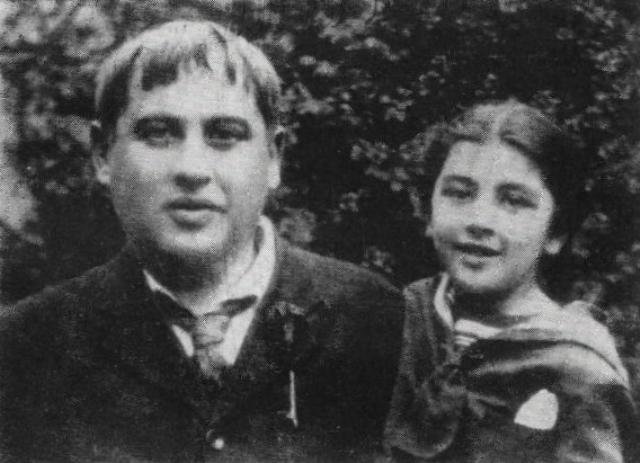
Chronicle
“Irakli often visited the poet Titian Tabidze’s daughter, Nita, on Griboyedov Street in Tbilisi.
They would sit and talk for hours.
Nita told him about a strange dream:
“Father says that when Irakli arrives, he will tell you when we will meet.”
“Father is coming to this room today.
He comes to see you often.
He will look at you sleeping and then he will leave.” Irakli said to her.
“When will I die?” Nita asked him.
Irakli led Nita to the window and said:
“Look, Father is here, too.”
Nita, who was crying, said she saw her father in the darkened window, and he smiled at her.
And when Irakli and Nita returned to the table, they saw on the table the petals of an old rose that had not been there before.
And the rose was fragrantly fragrant.”
Sh. Shiukashvili
Archive Note
Tbilisi literary memory episode — Tabidze family house.
Vanga spoke to him and helped him in his sleep
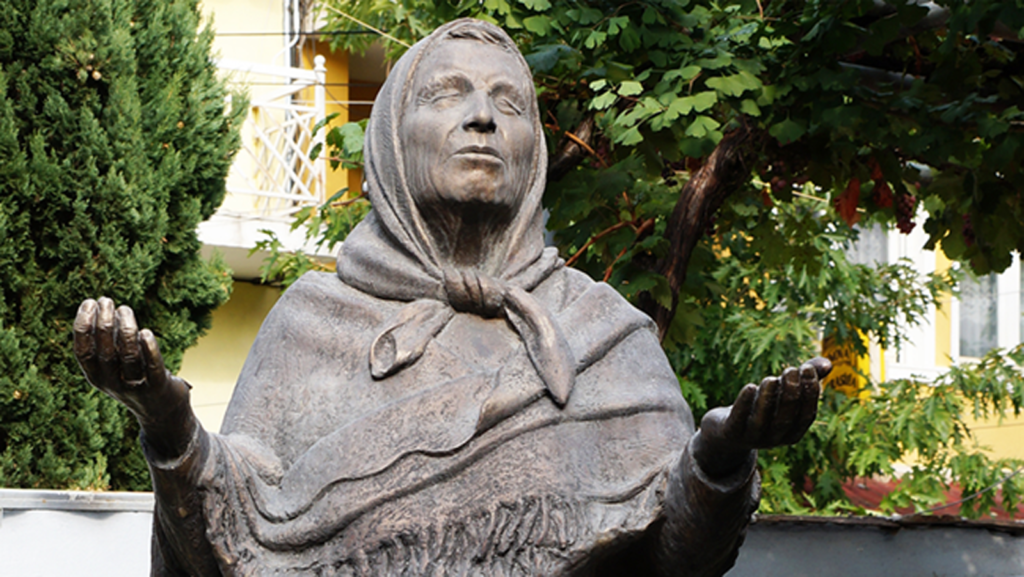
Chronicle
“How Vanga helped Irakli during his strange illness, which lasted a year.
How Irakli went to the woods at dawn and found a healing herb.
He made his own ointment and was cured.
He was sitting in the courtyard talking.
We thought he was talking to himself.
I went over and asked him:
“Who are you talking to, Irakli ?”
Vangelia came over, and we’re talking.
She says to me:
‘Now your hands can heal people and other beings.
You know the language of plants and birds and many invisible beings,” he told me and fell asleep.”
L. Meskhishvili”
Archive Note
Healing memory episode — Vanga/Vangelia narrative
Saint Ketevan – patron saint of the lonely and his aunt
Chronicle
,,Shortly before her death, she was collecting fallen leaves and wanted to go to Paris.
When his aunt passed away, people would come and bring flowers.
In the evening, at night, he was alone in his room.
He was sitting next to his aunt.
And I heard him singing a strange song to her.
I listened from afar in amazement and thought that the reason for this behavior was his sadness.
He said he was talking to her soul.
That she did not want to be buried where they had decided.
Then suddenly the burial place was changed.
The day of the funeral was moved.
And it happened on July 21, Irakli’s birthday.
He can speak to the soul of a dead person.
If he comes to the home of the deceased, sits next to the body and sings to it, the relatives will know the deceased’s wish. ”
D. Darchiashvili
Archive Note
Family memorial episode — aunt’s death and burial account.
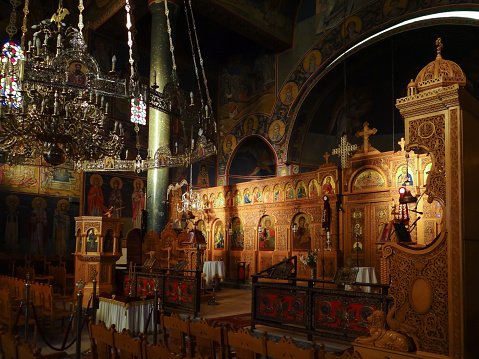
In the old church in the woods
Chronicle
” We went to the old church in the woods to light candles and pray.
We went to the temple, and Irakli sat in the courtyard looking at the trees.
When we came back, he went into the temple alone, and as he was leaving the temple, the priest shouted at him:
“What are you walking around here, these unbelieving tourists with long hair? And you think this is a museum? ”
Irakli turned to him and said:
“You have a stomach ulcer. You’re stealing money from the temple urn where people throw money. Say your prayers. Give the money back to the temple and shut up.”
The priest and the women around him were frightened and scattered around the yard.
The priest asked him how he knew all this:
“There are soldiers and nuns in the courtyard, and they told me,” Irakli replied.
And there was no one in the courtyard.
Suddenly it rained and the wind came up. “
R. Bekhtereva
Archive Note
Religious site episode — old forest church encounter.
Soil from Merab Kostava’s grave
Chronicle
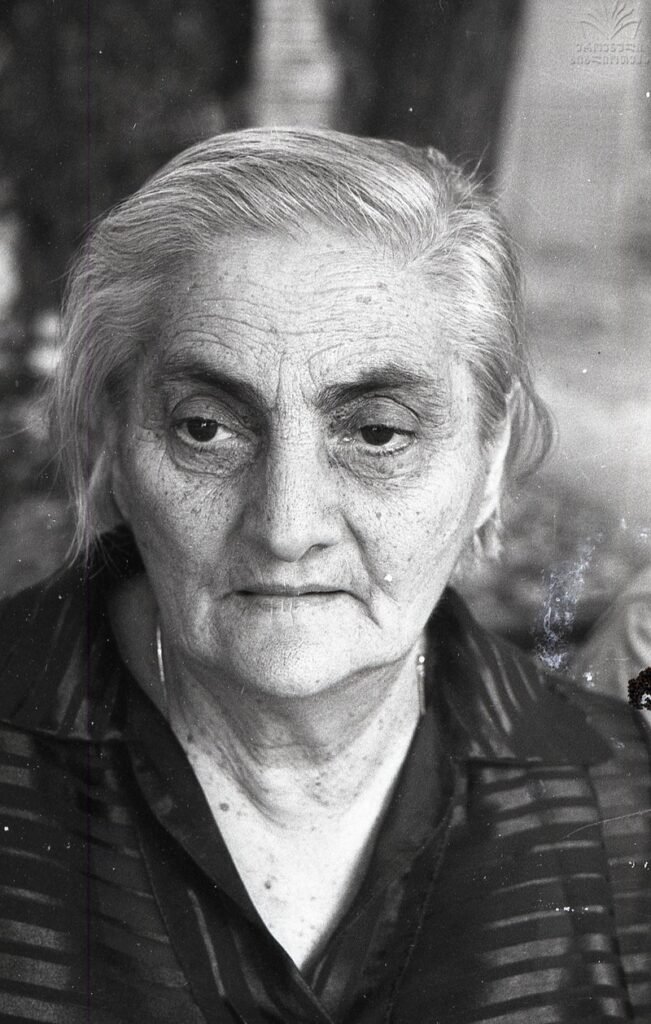
“When the date of the funeral of Georgia’s first president, Zviad Gamsakhurdia, was set in the city of Grozny, Merab Kostava’s mother, Olga Demuria Kostava, the grandmother of Oliko, who loved Irakli, asked him to come to her immediately.
She told Irakli that she had dreamed about Merab and her grandson Irakli.
Merab said to his mother:
“I want Irakli to gather soil from my grave for Zviad’s grave. His hands have great power.”
There was no transportation at the time.
Early in the morning Irakli went up the frozen mountain where Merab’s grave was, and as he was taking the earth from the grave, part of the Mtatsminda rock broke off and fell down with a rumble.
Thus expressed the great pain of Merab’s soul and welcomed Irakli .
When Irakli brought the earth to Merab’s mother, she told him that a bird had flown to her from Mtatsminda this morning and said that what Merab had wished had come true.
Irakli often walked in the courtyard with Oliko and she told him about her dreams.”
L. Pochiani
Archive Note
Memorial feature — Kostava /Gamsakhurdia /
The street musician’s songs and his final meeting with Irakli

Chronicle
“That evening we went to Irakli’s house with Samir Savchuk, a street musician who wanted to know his mother’s story.
Irakli treated us to a delicious dinner.
He gave us tea and jam, and when we were about to leave, Irakli told him:
“Samir, don’t go with these guys. They’ll invite you in for a drink. Don’t go. Don’t go anywhere that night.”
And then Irakli took me out of the room and said:
“Death walks around him. She walks and looks at him. She feels sorry for him, but soon she will take him away.”
I looked at Irakli and saw tears on his face.”
L. Barateli
Archive Note
Tbilisi memory episode — Samir Savchuk encounter.
Father Gabriel and the poet Irakli Nadaraia
Chronicle
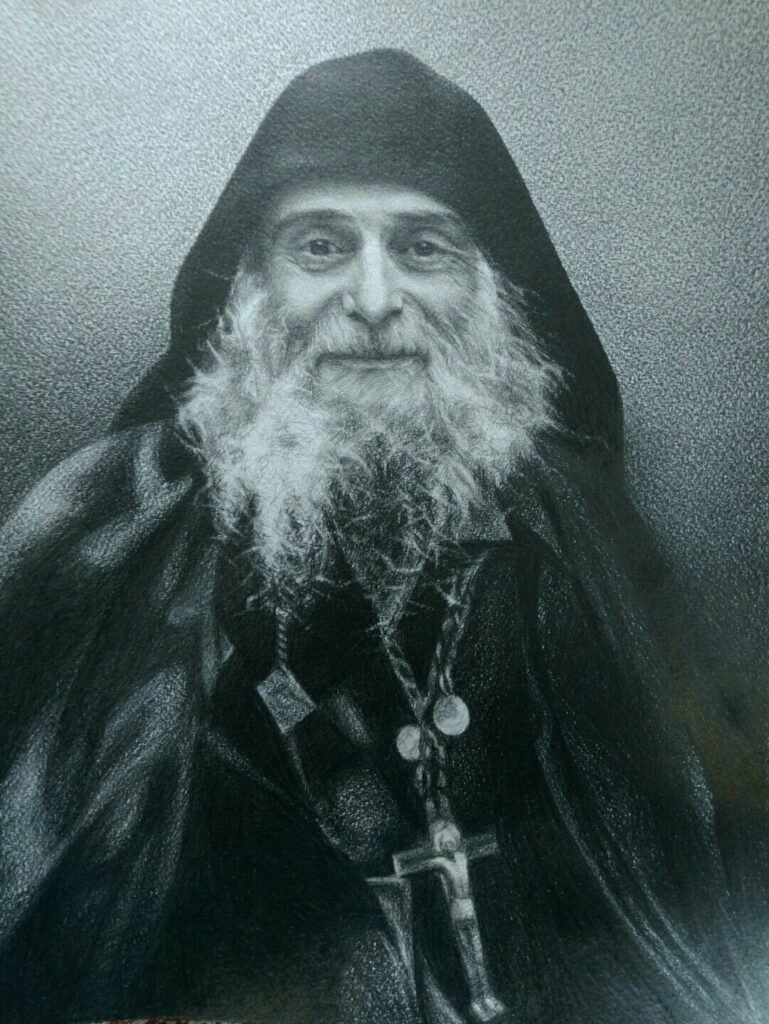
“I hurried to Mtskheta to see Father Gabriel.
And before leaving Tbilisi, I stopped to pray in the Kvashveti Cathedral.
Then I sat on a bench under a large tree in the Alexander Garden.
In the far corner of the garden I saw Irakli sitting alone.
He was sitting with his eyes closed and was silent.
I went up to Irakli and said hello to him.
He knew nothing about my meeting with Father Gabriel.
Suddenly, out of the blue, he handed me a piece of paper and said:
“Take this poem to Father Gabriel.”
I put the poem in my pocket and went to Mtskheta.
I talked to Father Gabriel, and when I was about to leave, my surprise was overflowing when Father Gabriel said to me:
“You forgot the poem. The leaf that Irakli sent me. “
I handed him Irakli’s poem.
Father Gabriel pressed it to his heart and said:
“How I love this child. His poem conceals a great mystery.
I will accompany his aunt, Ketevan, on his journey to the Lord”
P. Robakidze
“That day Irakli was driving to Batumi with his friends.
As they were approaching Mtskheta, he asked me to stop the car.
Father Gabriel is calling me.
He is waiting for me in the forest and wants to talk to me. “
Father Gabriel didn’t know much at the time.
And Irakli didn’t know him.
They stopped the car and waited a long time for him to return, but when they saw Irakli on the road leading into the woods, they started the car and drove off.
Irakli walked alone deep into the woods and noticed a man walking in the distance.
It was a thin monk dressed in black priestly garb.
When he saw Irakli, he exclaimed:
“This encounter is the will of God and a great mercy.
There is a great mystery in your verses.
Do not be angry with those who do not recognize you and hurt your heart.
Time will pass and people will realize that you are God’s gift to them.
Now let’s go gather nettles and the Lord’s herbs.”
That was Father Gabriel.
They went into the woods together.
They walked through the woods gathering nettles and herbs.
They talked and laughed loudly.
Father Gabriel rejoiced at this meeting and the walk through the woods.
And then Irakli saw him off to Mtskheta.
Father Gabriel hugged Irakli and said:
“This day will forever remain in my heart.”
F. Gudushauri
Archive Note
Mtskheta–Tbilisi spiritual encounter chronicle — Father Gabriel episodes.
About two mothers
Chronicle
,,The poet’s mother, Svetlana Bondarenko, was an athlete and champion swimmer.
But years ago, the press wrote about his Italian mother, Sofia Conti.
So which of these two women is Irakli Nadaraia’s biological mother?
His biological mother, Svetlana Bondarenko, of Ukrainian descent.
What is known about Sofia Conti?
And why did Irakli call her “mother”?
Irakli often says that he thinked of her for a long time.
She appeared in his dreams.
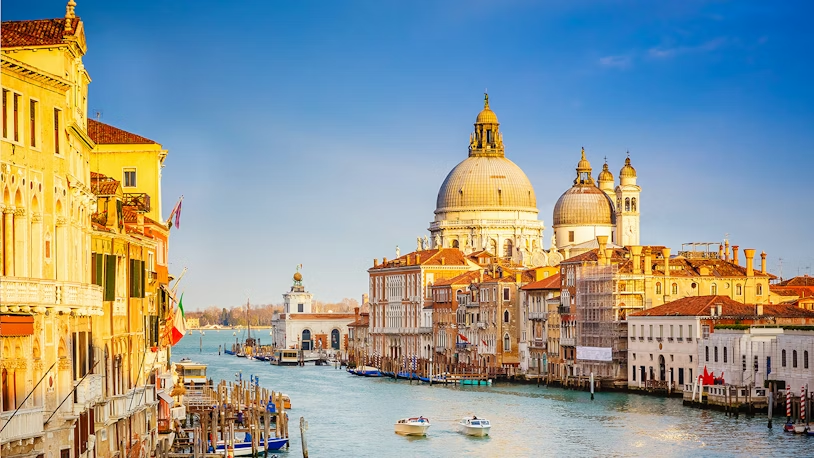
.And then he found her in Italy, in the city of Venice.
They communicated, became friends, traveled , and became close to each other.
Hence the story about the poet’s two mothers.”
g. shenderovich
Archive Note
Biographical clarification — dual maternal narrative.
They are moments that continue to exist in memory.
Based on real events and personal recollections.
Biographical Dictionary of Georgia ( საქართველოს ბიოგრაფიული ლექსიკონი ) http://www.nplg.gov.ge/bios/ka/00025799/
Irakli Nadaraia, 2026.
You are free to share and reproduce the texts published on this website for non-commercial and academic purposes, provided that full credit is given to the author (Irakli Nadaraia) and a link to the source is included.